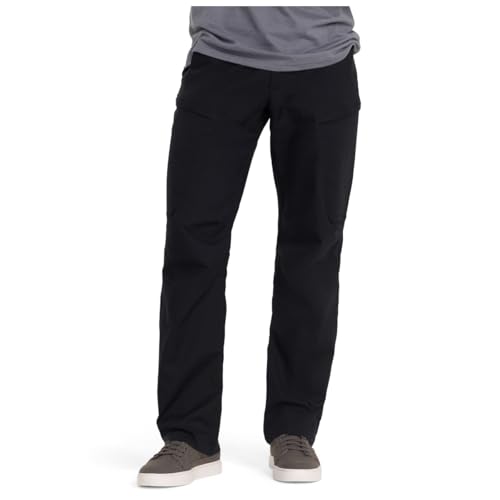
Black does not automatically mean office appropriate. A black trouser with large flapped cargos and a wide, gathered cuff communicates something different from a clean straight-leg pair worn with the same shirt. The question is not whether tactical pants can be made to look formal by choosing a dark color. It is whether a particular model belongs naturally in your workplace’s version of business casual. Start with the clothing already accepted there and use it as the comparison standard.
Quick Answer
Some understated tactical pants can work in a business-casual setting, but the employer’s actual dress expectations decide. Look for an appropriate fit, restrained pocket presentation and a fabric and color that coordinate with your work clothes. Cargo flaps, large pocket contents and visible utility details can change the result even when the trousers are black.
Establish the local meaning of business casual
Business casual is an imprecise label. One office may regularly accept neat jeans, while another expects conventional dress trousers or chinos. A visitor-facing role can also have a different expectation from a back-office role in the same organization.
Look for a written policy or a clear example of accepted clothing. If the policy does not address cargo pockets, visible logos or technical-looking fabrics, ask about the exact garment you are considering. A product photo is more useful than asking whether tactical pants in general are allowed.
Avoid interpreting silence as approval for a whole wardrobe purchase. A single pair that seems unobtrusive online can look different when worn, particularly if the pocket panels contrast with the main cloth or the leg opening is wider than expected.
If the setting explicitly requires traditional trousers, choose those rather than trying to redefine the requirement. The useful role of this article is to help identify compatible options where flexibility exists, not to persuade an employer to accept a category it has ruled out.
Inspect the visible architecture from waist to hem
Begin at the waistband. A shirt worn tucked in exposes the belt, closure and upper pocket details; an untucked shirt may cover some of them but introduces its own dress-code question. Judge the outfit in the form you will actually wear it.
Next examine the thigh. External cargo flaps, bellows pockets and prominent reinforcement create visual activity. Inset or zipped storage can present a cleaner line, although a zipper pull or sharply angled opening may still look utilitarian. The aim is not to make those details disappear in theory but to decide whether they are appropriate in the actual room.
Look at seams and thread contrast. A subdued color can still have noticeable panel shaping. Fabric texture matters as well: a visible ripstop grid, a smooth woven surface and washed denim do not give the same impression, even in closely related shades.
Finish with the cuff and shoes. Excess length that piles up over a low shoe can make the whole outfit look less deliberate. A very narrow opening may sit awkwardly over bulkier footwear. Choose a hem break that works with the shoes you normally wear rather than judging the trousers barefoot.
Consider these model directions without promising approval
The men's 5.11 Apex is worth examining for its canvas construction and zippered cargo arrangement. It is still a utility pant, and the presence of cargo storage may remain too visible for some offices. Inspect it as a candidate for a flexible setting, not as a guaranteed substitute for dress trousers.
Helikon CTP VersaStretch takes another approach by placing additional organization around the hips and internally. This offers an alternative to conventional thigh cargos. Its cut, surface texture and waistband still need to work with your outfit and workplace expectations.
The women's 5.11 Apex deserves its own evaluation rather than borrowing the men's fit assessment. The manufacturer describes a comfort waist and articulated construction, but the way it sits through an individual wearer’s hips and rise determines the appearance. Do not assume that a shared model name produces the same proportions on both versions.
A conventional chino remains an important comparison even when you prefer tactical clothing. If you carry very little and do not need additional compartments, its simpler exterior may meet the brief more directly. Choosing it is not missing out on functionality you would have used.
These model directions are based on documented design, not an office wear test. Their value is to illustrate different ways of managing visible utility, leaving acceptance and personal fit to the actual setting.
Compare the models discussed
5.11 Men’s Apex Pants, Helikon-Tex CTP VersaStretch Pants, 5.11 Women’s Apex Pants
As an Amazon Associate I earn from qualifying purchases. Purchases take place on Amazon.
A desk-and-doorway outfit check
| View or position | Question to answer | Adjustment to consider |
|---|---|---|
| Standing at a doorway | Does the overall silhouette resemble accepted work clothing? | Different cut or less prominent cargo construction |
| Seated at a desk | Do loaded pockets distort the thigh or pull the waistband? | Carry fewer objects or choose another compartment |
| With the shirt tucked | Are the belt and closure appropriately understated? | Compatible belt or a different waistband design |
| With normal office shoes | Does the hem sit deliberately rather than bunch? | Correct inseam or a suitable alteration |
| In ordinary indoor light | Do fabric texture and shade coordinate? | Compare actual colors rather than screen labels |
Take the complete outfit seriously. A utility pant may work with one neat casual shirt and look out of place with a more formal jacket. Do not evaluate each item independently and assume that individually acceptable pieces automatically make a coherent combination.
If you use a mirror or photographs for your own comparison, include a seated view. Many office hours are spent that way, and an empty standing silhouette can conceal the effect of pocket contents.
Use the storage without making the outfit carry everything
The main reason to consider tactical pants in an office may be convenient organization. That benefit is strongest when the load is modest: perhaps a phone, keys and a small access card. Filling every compartment can undermine the understated appearance that made the garment a candidate.
Try placing a large object in a different location or leaving it in a bag. A clean-looking trouser with an overfilled thigh pocket will not remain visually clean simply because its construction is described as low profile.
Separate necessary access from habitual carrying. An object used once at the beginning of the day may not need a dedicated trouser compartment for eight hours. A smaller daily load can expand the range of garments that meet both your practical needs and the dress expectation.
Avoid buying extra capacity as a substitute for deciding what belongs in your pockets. The most successful office arrangement may involve fewer objects and a simpler pant, even if you appreciate more extensive storage for other settings.
Choose color with the rest of the wardrobe present
Black, navy, gray and khaki can all appear in casual work wardrobes, but names alone are unreliable color matches. Midnight navy from one brand may not look identical to dark navy from another, and two screens can display the same image differently.
Compare the actual garment against the shirt, shoes and jacket you intend to wear. Look in ordinary indoor light as well as daylight where practical. A color that looked neutral online may lean warmer, cooler or more saturated in person.
Do not assume that matching a uniform shirt requires the closest color name. If your workplace expects a coordinated set, ask whether it specifies the garment or an approved shade sample. Slight differences can be more noticeable when pieces are worn directly together.
For personal styling, consistency may matter more than a precise match. A deliberate contrast can look clearer than two nearly matching colors that appear accidental. This is a preference judgment, not a universal rule, and it should remain secondary to the workplace’s requirements.
Keep the appearance manageable after the first wear
A pair that looks suitable only immediately after unpacking may be inconvenient for regular work. Check how its care directions fit your routine and whether you can keep the hem, pocket flaps and overall shape looking tidy without using prohibited heat or treatments.
Do not iron or starch a technical fabric simply because you want a sharper office appearance. Follow the individual label. If the required finish cannot be maintained within those directions, choose a different garment rather than experimenting on the new purchase.
Treat alterations as part of the decision, not as an unlimited rescue plan. Hemming may improve a suitable pair, but it cannot remove every design detail or make an incompatible rise fit properly. Discuss visible pockets and panel locations with an alterations professional before committing to changes.
Once the model works through a normal clothing cycle, it is easier to decide whether additional colors belong in the rotation. Establish that practical success before purchasing several pairs on the strength of the initial photograph.
Frequently asked questions
Are black tactical pants equivalent to black dress pants?
No. Color is only one part of appearance. Pocket flaps, reinforcement, seam placement, fabric texture and cut can remain visibly different. Compare the exact garment with what the workplace accepts, and do not use a dark shade as a shortcut around a dress requirement.
Can women’s tactical pants work with an office blouse?
Some combinations may suit a flexible business-casual setting, but evaluate the complete outfit and the specific women’s cut. Rise, hip fit and loaded pockets affect the result. Employer expectations still apply, and a men’s model assessment cannot establish how the women’s version will look.
Should I hide cargo pockets with a long untucked shirt?
Only if that shirt style itself suits the workplace and the outfit works naturally. Covering a feature is not the same as choosing an appropriate garment. If the look depends on continually concealing the trousers, a cleaner pocket design or conventional chinos may be the easier choice.
Final Verdict
Let the workplace and the complete outfit decide. An understated tactical model can be useful when modest additional storage fits naturally into an accepted silhouette. If the cargo architecture, texture or loaded appearance remains conspicuous, conventional chinos or trousers may serve the office better. The goal is clothing that looks intentional through the whole workday, not just a product photo in a neutral color.
Compare the models discussed
5.11 Men’s Apex Pants, Helikon-Tex CTP VersaStretch Pants, 5.11 Women’s Apex Pants
As an Amazon Associate I earn from qualifying purchases. Purchases take place on Amazon.
Sources
Explore the related shopping collection · How our guides are prepared