The seat changes the garment. A phone that rests neatly against the leg while standing can tilt across the thigh once you sit, and a belt buckle that felt unobtrusive can become noticeable when the torso bends. Driving-focused trouser selection should start with these interactions rather than an occupation label. This guide addresses ordinary clothing fit and organization for people who spend much of the day seated and make repeated stops; all fitting and adjustment checks should be done while parked.
Quick Answer
For long periods of driving, prioritize a waistband and rise that remain comfortable while seated, and keep bulky belongings away from areas pressed against the seat. Evaluate the exact trousers in your parked vehicle before relying on them for a shift. Stretch and cargo capacity are useful only when their placement suits your body and seat.
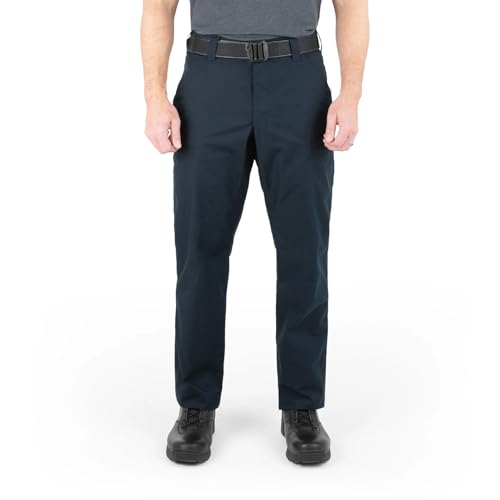
Evaluate the waist in the position that occupies the day
Fasten the trousers as intended and sit in the parked vehicle in your normal position. Notice the front closure, the sides of the waistband and the back rise. Does the waist remain comfortably placed, or do you need to tug it upward or release the fastening to settle in?
A larger waist is not always the right correction. If the garment is comfortable only when pulled lower than intended, the rise may be wrong for your proportions. If the seat or thigh is restrictive while the waist has room, another cut may be more useful than another size.
An elastic or sliding waistband provides one kind of adjustment, but it does not change every dimension. Do not buy a smaller size on the assumption that an expansion feature should be fully stretched during normal wear. Use the brand’s sizing instructions and evaluate the whole cut.
Include the shirt and belt you wear for work. A tucked shirt adds material around the waist, while a large buckle can introduce its own pressure point. Check that the ordinary outfit works together rather than assessing the trousers alone and discovering the difference on the first shift.
Give the phone and wallet a seated address
Choose where frequently used objects will live before filling the pockets. A thick wallet in a rear pocket or a large phone at the bend of the hip may be inconvenient against the seat. The solution can be a different compartment or a storage location in the vehicle when appropriate, rather than a different fabric.
Test each intended compartment while parked. Can you retrieve the item without twisting awkwardly, moving a strap or struggling with a closure? Is the opening still usable with your jacket on? A pocket can have enough volume and still be poorly placed for seated access.
Do not treat every object as something that must remain on your body. A folded worksheet used only at stops might belong in a folder rather than a cargo pocket. Reducing the load may improve both fit and organization.
Keep the arrangement consistent. If you use one location for the phone and another for keys, rehearse that system while stationary before the day begins. This guide is not an invitation to handle belongings or adjust clothing while driving. Address the clothing problem at a stop rather than accepting a setup that repeatedly demands attention in motion.
When comparing two models, use the same objects and cases. Otherwise a thinner phone case or lighter key bundle can create an apparent garment improvement that came from changing the contents.
Look for useful construction, then test its relevance
First Tactical’s men's A2 offers a documented combination of mechanical-stretch canvas, a panel stretch waist and zippered cargo organization. Those details make it a reasonable candidate to investigate for seated work, particularly if the pocket presentation appeals to you. They do not establish that every driver will find it comfortable.
The men's 5.11 Stryke takes a ripstop approach with a self-adjusting tunnel waistband. Comparing these two directions lets you evaluate different cloth and waist construction rather than searching for a single best driving fabric.
For women, assess a women’s model on its own terms. The women's 5.11 Apex is described with a comfort waist and its own articulated construction. Men's waistband details should not be transferred to the women’s Stryke or other similarly named garments. Hip and rise fit deserve the same attention as the tag size.
In each case, inspect the actual pocket openings before deciding where a phone will go. Published pocket counts are not a map of seated convenience. If the relevant dimensions are absent, leave the fit of that object unresolved until an inspection is possible.
The most helpful specification is the one that identifies a question for your fitting assessment. Mechanical stretch suggests checking movement; an adjustment mechanism suggests checking the available waist room; a zipped cargo pocket suggests checking seated access.
Compare the models discussed
First Tactical Men’s A2 Pants, 5.11 Men’s Stryke Pants, 5.11 Women’s Apex Pants
As an Amazon Associate I earn from qualifying purchases. Purchases take place on Amazon.
Check the stop as carefully as the seat
A shift with repeated entries and exits adds a different movement from uninterrupted sitting. While safely parked, step in and out as you ordinarily would. Notice pulling at the thigh or crotch and any change in cuff position around your footwear.
The trousers should not require an exaggerated movement merely to clear a tight leg opening. If a long cuff bunches at the shoe or a pocket catches against the seat edge, inspect whether the problem is length, cut or the loaded object.
Try bending to a comfortably reachable low shelf or picking up a light everyday item at a stop. This can reveal whether the waistband remains in place through the transition between sitting and standing. You are evaluating clothing convenience, not conducting a physical performance test.
If knee shaping is prominent, observe where it sits after several transitions. A panel that aligns while standing may shift when the waist slides. Resolve the underlying fit instead of repeatedly rearranging the garment.
Wear the normal footwear during these checks. The same inseam can sit differently over a low shoe and a taller boot, and changing the shoe can alter the amount of fabric that gathers around the ankle.
Use a parked-vehicle acceptance record
| Check | Useful observation | Next decision |
|---|---|---|
| Seated waist | Comfortable, localized pressure or sliding | Keep, change rise/cut, or investigate size |
| Phone placement | Flat and accessible, tilted, or pressed against the seat | Choose another compartment or reduce pocket load |
| Shirt and belt | No interference or visible bunching | Assess the full outfit before blaming the fabric |
| Entry and exit | Free movement or pulling at a specific seam | Look at thigh, seat and rise together |
| Cuff position | Appropriate break or repeated gathering | Check inseam and shoe compatibility |
Use plain notes rather than a numerical comfort score. Right thigh pocket presses when seated is actionable; comfort seven out of ten says little about what should change. A few precise observations can make the next purchase much easier to assess.
Also distinguish garment issues from items added to it. If removing an overfilled pocket solves the problem, the first decision may be about organization. Buying a larger pair could introduce a loose waist without addressing the habit that caused the inconvenience.
Plan the repeatable work rotation
Once a pair works in the stationary fitting checks, review the practical details needed for repeated use. Does the color meet the job’s clothing expectation? Are the care directions manageable between shifts? Is the chosen size and length identified clearly enough to reorder without confusing a different model?
Check all compartments before laundering. Seated-work routines often involve small paper items, pens and cards that can remain in less obvious pockets. A consistent emptying order is useful when the garment has several internal organizers.
Follow the individual label for drying and ironing. Do not use heat to force a fit change or to recreate a shape the garment did not have initially. If the rise or leg cut is wrong, maintenance is unlikely to be the right solution.
Avoid buying a full set solely from the first few minutes of a standing try-on. A representative pair gives you a chance to understand the model before committing to several colors. Keep retailer conditions in mind while the purchase is still being evaluated.
The final goal is a stable clothing arrangement that does not demand repeated adjustment. Once the waist, footwear and modest pocket load work together, another compartment or marketing feature may not improve the driving day.
Frequently asked questions
Is an elastic waistband always best for driving?
No. Expansion can help some wearers, but rise, seat room, belt choice and the location of seams also matter. A flexible waist cannot correct every cut mismatch. Evaluate the complete outfit while seated in a parked vehicle and use the model’s own sizing guidance.
Where should I put a large phone during a long seated shift?
Choose a location that does not create an awkward pressure point and remains appropriate for your routine. That may be a different trouser compartment or suitable vehicle storage. Test the arrangement while parked; do not handle the phone or adjust the pocket setup while driving.
Will buying a longer inseam improve seated coverage?
It may change cuff coverage, but it can also create excess fabric while standing. Check the rise, normal shoe and actual seated position before changing length. A longer hem does not fix restrictive thighs or a waistband that slides, so identify the source of the issue first.
Final Verdict
Judge driving trousers from the seat outward. A suitable waist and a sensible location for a few belongings matter more than an impressive cargo specification. Use a parked-vehicle assessment to identify the exact source of interference, then change the cut, configuration or pocket load accordingly. The pair worth repeating is the one that remains easy to wear through both the long seat and the ordinary stop.
Compare the models discussed
First Tactical Men’s A2 Pants, 5.11 Men’s Stryke Pants, 5.11 Women’s Apex Pants
As an Amazon Associate I earn from qualifying purchases. Purchases take place on Amazon.
Sources
Explore the related shopping collection · How our guides are prepared