Put a shopping list beside two product photos before deciding which category is better. If the list contains a phone, wallet, keys and a notebook, the important difference may be a pocket opening rather than the word tactical. If the trousers are for a casual office, the visible flap and leg shape may matter more. This comparison helps you separate real construction differences from labels that retailers often use together. It also explains when a straightforward cargo pant is enough and when a more specialized layout deserves closer attention.
Quick Answer
Cargo pants are identified mainly by their cargo-pocket design; tactical pants describe a broader utility-oriented category. They overlap extensively. Decide by comparing the exact pockets, movement room, fabric and appearance of two garments. Neither label automatically means better durability, greater comfort or more useful storage.
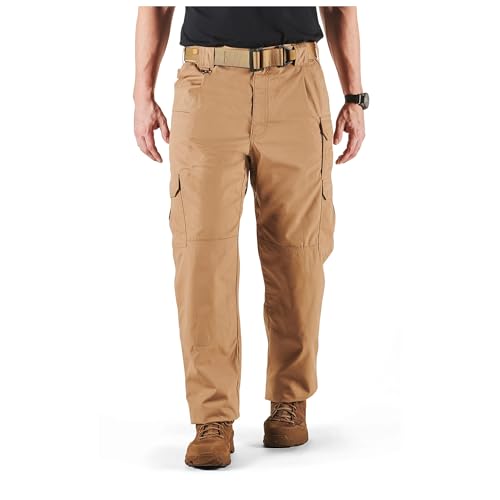
Two descriptions that frequently apply to the same pair
Cargo usually points to the presence of additional utility pockets, often around the thighs. Tactical is a less specific description of a garment's intended priorities. A retailer may call one model tactical cargo pants because both terms describe aspects of the same item.
This overlap means there is no reliable rule that tactical pants must have more pockets, or that ordinary cargos cannot have articulated knees. You can find minimalist tactical designs and elaborate conventional cargos. A comparison based only on the names can therefore create a distinction the actual products do not support.
For shopping purposes, treat the category as the start of a search rather than the end of an assessment. Open two exact listings, identify the details that differ, and ignore shared marketing adjectives. If the garments have the same useful layout and both fit your requirements, the category name itself provides little reason to favor one over the other.
Compare the cargo pocket as a small piece of luggage
A pocket has an opening, an internal shape, a position and a closure. Each affects what you can put inside it. A broad flap may cover a large compartment but require two hands to arrange neatly. A narrow zipped opening may suit a smaller item while making a thick notebook awkward to insert.
The shape when loaded also matters. A bellows-style pocket can expand away from the leg; an inset compartment may look flatter when empty but still show an outline when full. Neither construction eliminates bulk. Ask where the stored object will sit relative to your knee and the edge of a chair.
Pocket capacity claims are often incomplete. If no dimensions are given, avoid assuming a familiar phone will fit merely because the compartment is called a phone pocket. Compare the actual opening against the phone and its case once the trousers arrive, keeping any return conditions in mind.
Cargo pants with one genuinely convenient compartment may serve you better than tactical pants with several small organizers that do not fit your belongings. That is why pocket count should be the last number you compare, not the first.
A practical side-by-side assessment
| Comparison point | What to inspect on either category | A useful decision |
|---|---|---|
| Thigh storage | Opening width, closure and loaded position | Choose the arrangement that fits your actual items |
| Waist | Fixed, elastic or adjustable construction | Allow sitting comfort without relying on an oversized waist |
| Leg shape | Seat room, knee shaping and cuff opening | Match movement and footwear rather than a style label |
| Fabric | Composition, construction and any stated weight | Compare known specifications, leaving unknowns unresolved |
| Appearance | Flaps, exposed seams and pocket bulge | Select the level of visible utility you want |
Use the same comparison conditions. A photograph of one empty pair laid flat and another worn with filled pockets is not an equal appearance test. Similarly, a relaxed cargo cut and a slim tactical cut differ in silhouette as well as category. If possible, first narrow both candidates to the kind of fit you prefer, then compare their details.
Movement features deserve individual attention
People sometimes associate tactical pants with flexibility and cargo pants with a loose fit. Those are tendencies in some products, not dependable definitions. Check how each candidate makes room for the body rather than assuming the name settles it.
A gusset can change how the crotch seams meet. Knee shaping can provide room where the leg bends. Stretch may come from the cloth construction or from fibers such as elastane. An action waistband changes waist behavior but says little about the stretch of the entire leg.
The men's Taclite Pro and men's Stryke illustrate why exact models matter even within one tactical brand. 5.11 describes different fit and fabric approaches for them. You should not infer that the Taclite cloth behaves like Stryke simply because both listings include tactical and cargo.
Try an ordinary movement that represents your day: retrieving something from a low cupboard, stepping into a car or sitting at a desk. A loose thigh with a restrictive rise can still feel wrong. Additional pockets do not compensate for that mismatch.
Compare the models discussed
5.11 Men’s Taclite Pro Pants, 5.11 Men’s Stryke Pants, First Tactical Men’s V2 Tactical 114011 Pants
As an Amazon Associate I earn from qualifying purchases. Purchases take place on Amazon.
Fabric can reverse your first impression
A traditional-looking cargo pant may use a light synthetic blend. A streamlined tactical pant may use a heavier cotton-rich material. Appearance alone will not reliably identify how substantial the garment feels or how quickly it will dry after washing.
Consider the men's 5.11 Apex as a specific example. Its manufacturer describes stretch canvas and zippered cargo pockets, whereas the men's Stryke uses mechanical-stretch ripstop. Both are tactical offerings, but their cloth construction differs. That is a more useful fact than treating tactical as a single fabric type.
If you prefer a visible woven grid, look for a documented ripstop construction. If you want a smoother visual surface, investigate the actual photos of canvas or other woven options. Avoid translating the surface into an unsupported promise about tear resistance or lifespan.
Care instructions also belong in this comparison. Two garments with similar-looking cargo pockets may allow different drying or ironing methods. If your household routine depends on a dryer, checking the garment's directions can eliminate an unsuitable choice before styling details become a distraction.
When ordinary cargo pants are sufficient
Choose a simpler cargo design when its pockets carry what you need, its cut suits you and its appearance fits the setting. There is no requirement to upgrade categories to carry a few everyday objects. A straightforward pair can also be easier to assess because it presents fewer specialized compartments and adjustment mechanisms.
Imagine someone buying trousers for weekend errands who uses a thigh pocket only for a folded list. Extra internal dividers may add little. Their meaningful choices are likely to be fit, fabric feel, color and laundering convenience. Paying attention to those factors is more productive than seeking the greatest number of utility features.
Simplicity is not automatically a lower price, however. Prices vary by brand, promotion and model. Compare the actual current offers without assuming that cargo means budget or tactical means premium. A garment is good value when the complete purchase meets your needs at an acceptable cost, not because its label belongs to one side of this comparison.
When a particular tactical layout earns its place
A more specialized arrangement is worth investigating when you can name the problem it solves. Perhaps a rear-pocket wallet is uncomfortable while seated, and a different hip compartment gives you another place to try it. Perhaps your notebook tips sideways in a large cargo pocket, and an internal divider would organize it more conveniently.
The men's First Tactical V2 is a candidate for shoppers interested in utility-oriented construction, while Helikon CTP illustrates storage concentrated around the hips. Those examples should trigger a closer look at the layout; they are not declarations that either will fit your objects better without checking dimensions.
Write the desired improvement as a sentence before buying: I want my notebook to stay separate from my keys, or I want less visible thigh-pocket bulk. You can then evaluate a product against a clear requirement. If the proposed benefit cannot be described that concretely, the additional detail may be more attractive on a specification sheet than useful in practice.
Choose the pair without buying a category identity
There is a simple way to avoid getting trapped by terminology. Cover the product headings and compare the photos, specifications and size charts. Which pair has the better match to your list of belongings, footwear and daily positions? Then read the headings again. If the preferred pair changes only because one is called tactical, reconsider what evidence changed.
For work, add a separate check for permitted appearance and any specified garment requirements. An ordinary cargo pant and a tactical pant can both be unsuitable for a particular uniform. Do not let broad intended-use wording substitute for an exact requirement.
For casual wear, preference has a legitimate role. You may like visible cargo pockets or prefer something understated. You do not need to turn that aesthetic decision into a claim about performance. Choosing a design because it looks right, fits well and carries your belongings is a complete reason to buy it.
Frequently asked questions
Are tactical cargo pants a separate third category?
Usually the combined phrase describes a tactical-oriented pant with cargo storage. It does not create a standardized third class with fixed specifications. Read the model details to learn where the pockets sit, how they close and whether the cut suits your intended use.
Will tactical pants always last longer than basic cargo pants?
No. The category label does not establish service life. Materials, seam construction, fit, use and care all matter, and published reinforcement details are not a measured comparison against every other garment. Choose on documented construction and realistic maintenance rather than a universal durability promise.
Which category is better if I dislike bulky thigh pockets?
Search by pocket configuration instead of choosing one label. Inset cargo, zipped compartments and hip-based organization can be less visually prominent than large external flaps. Inspect the exact model and remember that pocket contents can create bulk even in an understated design.
Final Verdict
The strongest purchase is the one that remains convincing after the category names are removed. Pick ordinary cargos when they already provide the space and fit you need. Investigate tactical models when a specific construction detail answers a recurring inconvenience. In either case, give more weight to pocket position, movement and fabric than to the language a seller uses to describe the trousers.
Compare the models discussed
5.11 Men’s Taclite Pro Pants, 5.11 Men’s Stryke Pants, First Tactical Men’s V2 Tactical 114011 Pants
As an Amazon Associate I earn from qualifying purchases. Purchases take place on Amazon.
Sources
Explore the related shopping collection · How our guides are prepared