A pocket that is convenient for a packet of seeds can become a pocket full of loose soil by the end of the afternoon. Gardening makes small design details visible: how a flap closes, where a phone sits when you bend, whether a cuff gathers near a shoe and how many compartments need emptying before washing. Rather than recommend one pair for every kind of yard work, this guide follows the clothing decisions that change between planting, potting, watering and general tidying.
Quick Answer
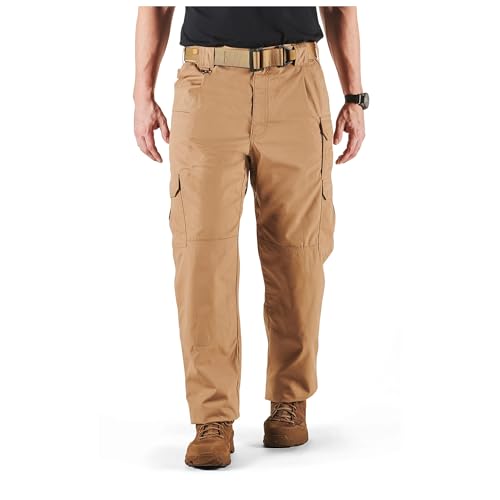
Tactical pants can be useful for gardening when the cut allows comfortable bending and the pockets carry a small, sensible load without collecting too much debris. Choose construction around the work you actually do. Extra knee fabric and water-repellent finishes are not guarantees against thorns, chemicals or other hazards, and specialized requirements need separate equipment.
Divide the afternoon into movements
For potting at a bench, standing comfort and reachable small-item storage may dominate. For planting at ground level, the rise, thigh and knee arrangement deserve more attention. For moving between beds with a watering can, pocket load and cuff length may become the noticeable details.
Write down the two tasks you do most often. This prevents a rare task from driving the entire purchase. Someone who spends most gardening time at raised containers may have little use for an elaborate knee system, while a person who frequently works near ground level may want to investigate that construction carefully.
Do not treat the task list as a promise that ordinary trousers are suitable for every garden job. If an activity requires specified clothing or equipment, follow the relevant instructions. Tactical styling does not make a garment thorn-proof, chemical-resistant or otherwise specialized.
The clothing comparison here is about fit, organization and maintenance during ordinary yard activities. Start with those practical needs and keep any separate equipment decisions separate.
Try the planting position before filling the pockets
Put on the trousers with the shoes normally used in the garden. Bend to a comfortable low position, take a long step and sit briefly on a chair or suitable low seat. Notice where the waistband moves and where fabric pulls.
If the seat feels restrictive, determine whether the rise or thigh cut is the issue. A larger waist may create slipping without adding room in the right place. A gusset or articulated knee can be worth investigating, but neither feature guarantees that the overall cut suits your proportions.
For a documented knee-pad compartment, check the exact model and length. Compatible inserts may be sold separately, and some unhemmed versions omit access. Do not assume that extra fabric over the knee means an insert can be fitted.
The fit should also work when you return to standing. A garment that needs a tug at the waistband after every bend can become irritating during repetitive tasks. Identify that behavior during the initial assessment rather than assuming a stiff fabric will necessarily relax into the right dimensions.
Carry seeds and notes, not the contents of the shed
A small notebook, pencil, seed packet or plant label can be convenient to keep nearby. Their shapes favor different compartments: a narrow organizer may hold a pencil, while a broad flat space may be more suitable for paper that you do not want folded further.
Keep the load light enough that it does not pull the trousers unevenly. A cargo pocket capable of expanding around a bulky object is not necessarily comfortable when you repeatedly bend over it. If the object is used only occasionally, a nearby container or bag may be more practical.
Avoid using ordinary trouser pockets as indiscriminate holders for sharp or heavy garden tools. Follow the tool’s intended storage and handling guidance. The presence of a loop or reinforced opening does not establish that every tool should be carried there.
For paper items, think about both closure and cleanliness. A flap can reduce the open area above a compartment, but it does not make the contents waterproof or guarantee that soil stays out. Keep seed packets and notes in an appropriate separate cover when their condition matters.
At the end of the task, a consistent pocket-emptying order helps. Check the small organizers as well as the large cargos before the trousers move toward the laundry.
Compare the models discussed
5.11 Men’s Taclite Pro Pants, Helikon-Tex OTP VersaStretch Lite Pants, TRU-SPEC Men’s 24-7 Ascent Pants
As an Amazon Associate I earn from qualifying purchases. Purchases take place on Amazon.
Compare three construction directions for yard use
The men's 5.11 Taclite Pro offers a relaxed-fit direction with documented ripstop and reinforced seat and knees. It is a candidate for someone who prefers that kind of utility construction. The action waistband should not be confused with a claim that all of the fabric stretches like a different model’s cloth.
Helikon OTP VersaStretch Lite offers another direction when lighter fabric construction is a priority. Its difference from regular OTP is documented, but there is no measured cooling promise here. Examine whether the cut and pockets fit your movement and modest load rather than selecting it on the Lite name alone.
TRU-SPEC Ascent provides a third arrangement, with the maker describing inset cargo storage and internal knee pockets for optional pads. The inset layout deserves attention if you dislike the shape of more prominent surface-mounted cargos, while accessory compatibility needs its own exact check.
These directions answer different preferences. A person potting at a bench may care most about easy access to a notebook. Someone moving frequently between ground-level tasks may care more about rise and knee fit. Another gardener may simply want an ordinary pair that can be cleaned according to a manageable label.
None is presented as a tested winner for abrasion, thorn contact or all-day comfort. The specifications identify options to inspect; actual suitability remains a fit and task question.
Match the pocket and cuff to the kind of debris
| Task | Clothing detail to inspect | Potential inconvenience |
|---|---|---|
| Potting containers | Upper pocket opening and paper-item storage | Loose material falls into open compartments |
| Planting near ground level | Rise, thigh room and knee position | Waist shifts or cargo contents press when bent |
| Watering and moving between beds | Loaded pocket swing and appropriate cuff length | Bulky contents move with each step |
| General yard tidying | Closure accessibility and easy pocket emptying | Small debris remains in internal organizers |
| Changing back to ordinary clothes | Manageable removal and separate dirty-clothing storage | Soil transfers from cuffs and pockets |
The useful decision is usually specific. If soil repeatedly accumulates in an open cargo pocket, a more covered opening may be worth comparing. If the main problem is a dragging hem, a different pocket layout will not fix it. Match the feature to the inconvenience you actually observe.
Treat washing as part of the gardening routine
Before laundering, remove loose dirt and inspect the compartments. Propper’s tactical-clothing care guidance and 5.11’s washing guide both emphasize preparation and following the garment’s instructions. The exact label determines the permitted wash and dry settings.
Do not assume that every mark can be removed by a hotter cycle. A stain-treatment product must be suitable for the fabric and used according to its own instructions. If a mark involves something beyond ordinary household soil, follow the relevant handling guidance rather than applying a generic clothing tip.
Secure closures as directed so they do not catch on other laundry. Check the small corners of pockets for plant labels, paper scraps and other forgotten items. Extra storage creates extra places to inspect, which can be a reason to favor a simpler layout.
Dry and store the garment as its label allows. If you hang it, consider the additional layers around pockets and cuffs when checking whether it is fully dry. Do not promise yourself that a pair will be ready the next morning solely because a listing calls it quick drying.
An easy-care choice is the one whose actual requirements fit your household routine, not necessarily the one with the most ambitious marketing description.
Keep a dedicated pair only when that solves a real problem
A separate gardening pair can be useful if the tasks regularly leave visible soil or if you want to keep a consistent pocket arrangement ready. It can also simplify the decision about whether a favorite everyday garment should be used for messy work.
However, a specialized purchase is not compulsory. An existing suitable pair may already provide the movement and storage required. Compare it honestly before buying: what would change, and is that change worth the cost and another garment to maintain?
If you do buy, establish fit with a representative pair before making alterations or ordering more. Record the exact size and model if it works well. That is more helpful than remembering only that you liked a certain brand’s tactical pants.
The final test is mundane in the best way: can you concentrate on the planting or potting rather than on a slipping waist, an overfilled pocket or a cuff that needs rearranging? Choose the garment that makes those small interruptions less likely through an appropriate fit and a realistic load.
Frequently asked questions
Do I need tactical pants just to work at raised beds?
Not necessarily. Start with the movements and storage involved. If an existing pair already lets you stand, bend comfortably and keep a few small items nearby, it may be sufficient. A new garment should solve an identified inconvenience rather than satisfy a category label.
Are reinforced knees the same as a gardening kneeling aid?
No. Reinforcement describes added garment construction. An insert compartment is another feature, and a separate kneeling aid is a different item again. Evaluate the exact product and its intended use. Do not treat ordinary knee fabric as a guarantee of comfort or protection.
How can I stop seed packets getting lost in cargo pockets?
Use a deliberate compartment that suits their size and avoid mixing them with a large pile of unrelated objects. A separate cover may help keep the packets together, but the trouser pocket itself should not be assumed waterproof. Empty that compartment at the end of each session.
Final Verdict
Buy for the garden tasks you repeat, especially the positions and small items that currently make clothing inconvenient. A suitable rise, sensible pocket opening and correct hem can matter more than elaborate reinforcement. Keep the load modest and the cleaning routine straightforward. The right trousers support the afternoon’s work without becoming another project to manage.
Compare the models discussed
5.11 Men’s Taclite Pro Pants, Helikon-Tex OTP VersaStretch Lite Pants, TRU-SPEC Men’s 24-7 Ascent Pants
As an Amazon Associate I earn from qualifying purchases. Purchases take place on Amazon.
Sources
Explore the related shopping collection · How our guides are prepared