A muddy knee and a pen leak inside a cargo pocket can leave similarly dark marks, but they should not send you to the same treatment bottle. The first useful action is to work out what reached the fabric and where it went. This guide covers ordinary dirt, food-related grease and writing-ink mishaps, with a process designed to preserve the garment while you decide whether a mark is treatable at home.
Quick Answer
Identify the mark, read the garment and treatment instructions, and start with the least disruptive compatible step. Remove loose material without spreading it, test a treatment in a concealed area and inspect before drying. Mud, food grease and ink are different problems; do not apply one household chemical recipe to all three.
Before water: establish the extent of the mark
Set the pants apart from clean laundry. Remove belongings and inspect the reverse of the affected panel where accessible. A spot on the outside of a pocket may have reached the pocket bag, while a leaking pen can mark several folded layers. Treating only the visible surface may leave the original source in place.
Note what happened and what has already been applied. Fresh mud, a lunch spill and an old unknown mark provide different starting information. If you inherited the pair or discovered the stain days later, say unknown rather than choosing a confident diagnosis from its color. Photographing the mark can help if you later ask a cleaner for advice.
Read the garment label and any finish-specific guidance. Then read the proposed treatment product instructions, including which fabrics it excludes and how it should be applied and removed. Both sets of instructions need to agree. A product being sold for laundry does not mean it is suitable for every blend, dye or treatment used in tactical pants.
Make a small concealed test where the fabric matches the affected panel. Check the dried test area for color or surface change before expanding treatment. A successful hidden test reduces uncertainty but does not guarantee a large old stain will disappear. Avoid testing across a trim or reinforcement and assuming the result describes a different main-body fabric.
Mud: separate loose soil from the remaining stain
For ordinary mud, the first decision is how to remove excess material without driving it deeper or spreading it across the pants. Lift off loose clumps carefully. Once loose dry dirt can be removed without grinding the fabric, use a gentle approach rather than a stiff abrasive tool. Do not repeatedly scrub the same knee to make the weave look uniform.
Open accessible pocket bags and check folded hems for soil. These concealed areas can reintroduce dirt to a load even when the outside looks ready. Remove debris from hook-and-loop closures gently, without pulling out the loops or bending the fastening surface. Keep the pants over a suitable area so the removed soil does not land on other garments.
If a discoloration remains, use a treatment permitted for that fabric and then the approved wash process. Propper's care guidance distinguishes loose-debris removal from pretreatment of heavily soiled tactical clothing. That is a useful sequence: preparation comes before assuming the washer will solve every part of the problem.
After washing, inspect the knee under ordinary light. A remaining pale rough patch may be abrasion from kneeling rather than dirt. Compare its texture with the surrounding fabric. If the yarns are worn, another stain treatment will not recreate them. Stop chasing a clean-looking surface with increasingly aggressive rubbing.
Food grease: contain the mark and follow a compatible product
Remove the source of a food spill and lift excess material without dragging it along the leg. Blotting and inspection should aim to contain the affected area. Do not flood a pocket while a phone, paper notebook or removable pad remains behind it. Empty and separate accessible layers first.
Choose a laundry treatment whose instructions cover the relevant oily food mark and the garment's fabric. Follow its application and waiting directions rather than inventing a longer soak. Keep the label's washing limits in force afterward. A greasy mark does not authorize a hotter cycle than the garment permits.
Examine both the main panel and the pocket lining after treatment. A dark outline may remain in one layer even if the other looks clean. Give the garment a chance to be assessed in a consistent dry condition before deciding the result. Do not keep adding different products to a damp patch simply because its wet color makes it hard to interpret.
This food-spill approach is not advice for fuel, industrial solvents or unknown workplace chemicals. Those need the relevant workplace or professional instructions, and may involve handling requirements outside home clothing care. Identifying that boundary early prevents an ordinary laundry guide from being applied to a different problem.
Compare the models discussed
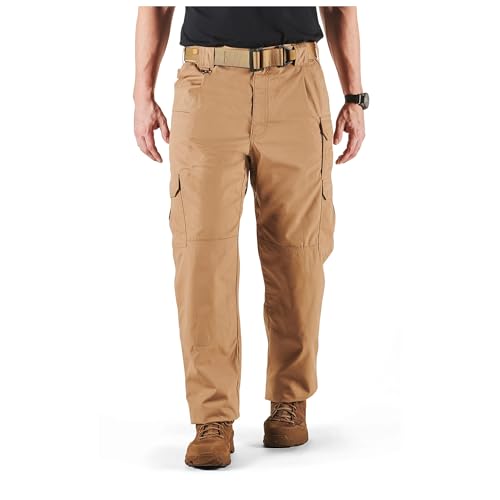
5.11 Men’s Taclite Pro Pants, Propper Men’s Tactical Uniform Pants
As an Amazon Associate I earn from qualifying purchases. Purchases take place on Amazon.
Ink: the pen type and pocket construction matter
Remove the pen or marker and keep the affected pair away from other laundry. Note the pen type if you know it, or retain the empty pen so you can identify it. Ink formulations differ; an instruction that works for one writing product cannot be assumed to work for all of them. The manufacturer's own ink-removal guidance can be useful when it identifies the exact product.
Check the pocket bag, dividers and surrounding panels. Avoid pressing a clean layer against the wet mark while turning the pocket. If access is restricted, forcing the lining outward can add a seam problem to the stain. A professional cleaner may be better placed to treat an inaccessible area than a home treatment applied blindly through multiple layers.
Use only a treatment that is compatible with both the ink and the garment. Do not adopt an alcohol, hairspray or other solvent shortcut from a generic online tip without checking the relevant instructions. A successful result on plain cotton does not establish compatibility with a finished blend, stretch component or contrasting panel.
If color transfers from the garment during a test, the fabric surface changes or the mark spreads, stop. Document what you used and seek advice rather than escalating through a row of bottles. Even if the ink cannot be fully removed, preventing a larger discolored area may preserve the trousers for another ordinary use.
A treatment decision table for the laundry area
Use the table as a triage aid when you are tempted to treat an uncertain mark immediately. It deliberately focuses on observations and decisions rather than a universal chemical recipe. Your garment label and the selected product instructions control the treatment details.
| Situation | Useful action | Reason to pause |
|---|---|---|
| Loose ordinary soil | Remove debris and inspect remaining discoloration | Fabric is already rough or torn |
| Known food grease | Check a compatible laundry pretreatment | Product excludes the fabric or finish |
| Identified writing ink | Check ink-maker and garment guidance together | Test spreads the mark or changes garment color |
| Unknown older stain | Record location and previous treatments | Several incompatible possibilities remain |
| Mark reaches hidden layers | Inspect accessible lining and dividers | Reaching it would strain or unpick seams |
Do not combine cleaning products to make a stronger mixture. Keep each proposed step traceable to compatible instructions. If professional advice becomes necessary, a clear treatment history is useful: name the product, describe where it was applied and explain whether the item has been washed or dried since.
When a mark becomes a repair or replacement question
Inspect the dry result before returning the pants to your ordinary rotation. Check whether the original stain remains, whether the fabric has changed and whether the garment still meets your appearance needs. An acceptable result for yard work may differ from a specified uniform, but that is an appearance decision rather than proof of a fabric defect.
A 5.11 Taclite Pro and a Propper Uniform Tactical listing provide real replacement models to compare if damage is substantial. Do not select either merely because a product title includes stain-resistance language. Surface-treatment claims are not a promise that ink or grease will always wash out, and they do not establish how an individual used pair will respond.
If the garment remains useful, change the habit that caused the problem. Keep a pen with a secure cap in a suitable sleeve, empty muddy compartments before storage and avoid using the same small pocket for an object that repeatedly leaks. A better pocket arrangement can reduce repeated incidents without pretending any trousers are stain proof.
If you consult a cleaner, bring the exact label information and explain the desired outcome. Ask whether treatment is likely to alter color or finish and whether a remaining mark is probable. A limited result can be a sensible choice when further treatment risks a larger change than the original spot.
Frequently asked questions
Should I put stained tactical pants straight in the dryer?
Inspect the mark after washing before continuing routine drying. If another treatment may be needed, follow the stain-treatment and garment instructions first. Drying is not a substitute for checking whether the stain was removed.
Can a pale knee patch be dirt?
It might be, but abrasion can also change the appearance and texture of a knee. Remove loose soil gently and inspect the yarns. A worn surface will not be rebuilt by additional stain remover.
What if I do not know which ink leaked?
Keep the garment separate, record any treatments already attempted and seek ink-specific or professional guidance. Guessing the formulation and applying a solvent is a poor basis for treating a finished tactical fabric.
Final Verdict
Good stain care is a sequence of small, informed decisions: identify, contain, check compatibility, test and inspect. Stop when the problem is becoming fabric or color damage rather than removable soil. Preserving a usable pair is a better result than turning one mark into an extensive treatment experiment.
Compare the models discussed
5.11 Men’s Taclite Pro Pants, Propper Men’s Tactical Uniform Pants
As an Amazon Associate I earn from qualifying purchases. Purchases take place on Amazon.
Sources
Explore the related shopping collection · How our guides are prepared