The most expensive mistake can be buying several pairs in a color that is almost right. A navy listing, a dark uniform shirt and a product photo may look compatible on screen, yet represent different shades when worn together. Security-uniform shopping is therefore partly a coordination task: you need a garment that belongs to the required outfit and can be repeated reliably. Useful pockets and comfortable movement matter, but they become relevant after the uniform details are clear.
Quick Answer
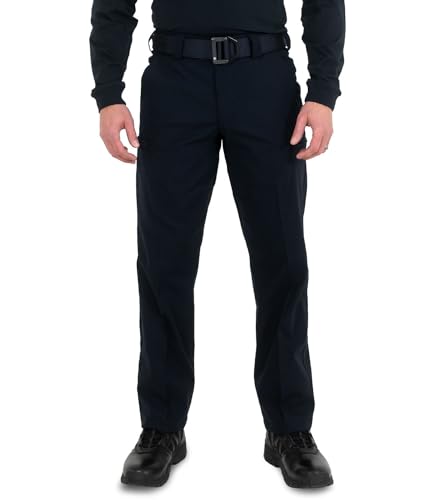
Choose security-uniform trousers by the employer’s actual clothing requirements first, then by fit and everyday storage. Confirm the exact color, acceptable pocket style and any specified model before buying. A pant marketed for security or duty is not automatically approved, and a tactical label does not establish protective properties.
Turn the uniform requirement into an orderable description
A useful clothing instruction identifies more than a broad category. Record the permitted color, whether cargo pockets are accepted, any logo or seam restrictions, and whether a particular model is specified. If the employer supplies a written guide, work from that rather than from a colleague’s recollection of an older arrangement.
Where wording is vague, ask about the exact candidate. A link or photograph can expose differences that the phrase black tactical trousers hides. The question may be as simple as whether external thigh flaps are permitted or whether a conventional uniform silhouette is required.
Also establish whether the employee is expected to purchase trousers independently or through a defined uniform process. This article does not determine reimbursement, employer policy or procurement rules. It helps you identify the garment questions to resolve before an order is placed.
Keep a record of the approved model and shade if those are specified. That makes later replacement purchases less likely to drift into a similar-looking variant with a different cut or pocket configuration.
Different posts can create different clothing inconveniences
A largely seated reception assignment, a walking-heavy site role and a position involving frequent vehicle entries do not place the same demands on ordinary clothing. Describe the actual movements rather than assuming that the occupation title supplies the answer.
For seated work, inspect where the waistband and pocket contents contact the chair. For repeated walking, consider whether a loaded cargo compartment swings or pulls unevenly. For frequent transitions, check that the rise and thigh allow you to sit and stand without rearranging the trousers.
The belongings also vary. One person may need a small notebook and keys; another may use a handheld work device. Measure the device with its case and identify how frequently it needs to be retrieved. An oversized generic pocket may not organize it as conveniently as a correctly placed compartment.
Keep this assessment within ordinary garment use. The presence of a loop, reinforcement or utility pocket does not establish compatibility with every item used in a role. Follow the relevant employer and equipment instructions for anything beyond simple clothing storage.
Compare cargo and cleaner uniform configurations explicitly
First Tactical’s catalog separates V2 Tactical, V2 BDU and V2 Pro Duty configurations. That separation is useful: they should not be treated as equivalent products merely because the family name includes V2. The Pro Duty six-pocket and Pro Duty Uniform names also refer to different configurations.
The men's V2 Pro Duty six-pocket model and V2 Tactical model provide two distinct starting points. A buyer whose workplace limits visible cargo styling can compare the actual photos and model descriptions rather than guessing from the word duty. A buyer permitted a more visible utility layout can evaluate the Tactical configuration against the belongings carried.
Propper Uniform Tactical is another specifically named candidate, separate from Propper Lightweight Tactical. Similar branding does not make their details interchangeable. If the employer names Uniform Tactical, do not substitute another Propper model because a search result places it nearby.
For women, start with the required women’s model where one is specified and evaluate the appropriate chart. A familiar size number from another brand is only background information. Rise and hip fit can affect both movement and whether the garment presents the expected silhouette.
These are comparisons of purchasing directions, not claims that a particular employer approves them. Approval comes from the actual uniform requirement, while the product documentation establishes what is being offered.
Compare the models discussed
First Tactical Men’s V2 Pro Duty 6 Pocket Pants, First Tactical Men’s V2 Tactical 114011 Pants, Propper Men’s Tactical Uniform Pants
As an Amazon Associate I earn from qualifying purchases. Purchases take place on Amazon.
A first-pair inspection for uniform consistency
| Item to confirm | What to compare | Why it matters |
|---|---|---|
| Model identity | Order title, garment label and required model | Similar family names can hide different layouts |
| Shade | Actual trouser beside the required shirt or sample | Color names are not cross-brand standards |
| Pocket appearance | Flaps, zippers, bulk and visible organizers | The silhouette may be part of the requirement |
| Length | Hem with the normal work footwear | Bunching or dragging changes the presentation |
| Waist and rise | Seated and standing position with the work shirt | Fit affects both movement and appearance |
| Care directions | Garment label against the available laundry routine | A repeatable uniform needs manageable maintenance |
Inspect the pair before laundering or altering it, within the destination retailer’s conditions. If it is not the required model or shade, tailoring is not a sensible way to fix the order. Resolve identity first, then assess fit.
If a garment arrives with details different from the listing you used, retain the order information and contact the seller through its process. TacticalPants.net is an editorial affiliate site and does not supply or exchange the uniform.
Avoid using the belt to compensate for a poor cut
A belt can secure an appropriately fitted waistband, but it should not be expected to correct a much-too-large waist chosen solely to gain thigh room. Gathering fabric around the belt can also make a tucked shirt and uniform waistband look untidy.
Assess the rise where the model is intended to sit. A garment pulled too high to avoid dragging can create a restrictive seat; one worn too low to relieve pressure may lose the intended coverage when bending. The better answer may be a different cut or inseam.
Use your normal shirt during the fitting. Check how much material sits inside the waistband and whether the outfit remains comfortable after sitting. A fit that works with a thin untucked T-shirt is not necessarily the same as the complete uniform.
If alterations are needed, identify them narrowly. A straightforward hem adjustment may be practical, while changing the rise or moving cargo pockets is a different undertaking. Consult an alterations professional about the actual garment before assuming a low-cost adjustment will resolve a proportion mismatch.
Plan a rotation by the real schedule
The number of pairs needed depends on the work schedule, laundry access and how the clothing is used. There is no universal security-uniform quantity that this site can prescribe. Work out when a worn pair can realistically be cleaned and ready again, then leave room for ordinary delays.
Once one model and size have proved suitable, record the details before ordering more. Note the exact shade name and any length designation. Do not rely on a saved image alone; product photos can be reused across several variations.
Keep color consistency in mind when replacing only part of a rotation. An older pair can look different after wear and laundering even when the new order has the same shade name. If a tightly matched uniform is required, use the employer’s guidance about acceptable appearance rather than assuming every new and old garment must be identical.
Care should follow the individual label. Avoid trying to darken, shrink or aggressively press an unsuitable pair into compliance. Selecting the correct item at the beginning is generally a clearer process than modifying an uncertain purchase.
Make reorder notes useful to your future self
A good reorder note contains the brand, full model, exact size and length, shade, and any alteration performed. Add a short observation such as straight leg works over these shoes or right cargo fits the required notebook. This turns personal experience into information you can actually use on the next purchase.
Keep the note separate from assumptions about all products in the brand. A women's version, newer revision or different fabric option can require another assessment. If the listing changes, compare it with the recorded garment details before treating it as the same replacement.
The aim is a dependable repeat purchase, not endless experimentation. Once the uniform requirement, movement and care routine are satisfied, focus on maintaining that clarity. More pockets or a new marketing label do not automatically improve an already successful work outfit.
Frequently asked questions
Can I order any navy tactical pant if the uniform says navy?
Clarify whether a particular shade or model is required. Navy names differ between brands and may look different beside the uniform shirt. If coordinated appearance matters, compare an actual sample or obtain guidance on the exact candidate before purchasing several pairs.
Are Pro Duty and V2 Tactical the same First Tactical pants?
No. The catalog presents distinct configurations, and Pro Duty itself includes differently named models. Match the complete product name and its details to the requirement. A shared V2 family label is not enough to identify the correct pocket arrangement or uniform silhouette.
Should I buy a full uniform rotation immediately?
First establish that a representative pair has the correct identity, shade and fit, following any employer purchasing process. Then plan the quantity around the actual schedule and laundry access. This reduces the chance of multiplying an ordering or sizing mistake across several pairs.
Final Verdict
Make the uniform specification precise enough to reorder before comparing optional features. Then choose the cut and storage that fit the actual post, using a representative pair to confirm the complete outfit. A successful security-uniform purchase is repeatable: the right model, the accepted shade, a workable fit and a care routine you can maintain.
Compare the models discussed
First Tactical Men’s V2 Pro Duty 6 Pocket Pants, First Tactical Men’s V2 Tactical 114011 Pants, Propper Men’s Tactical Uniform Pants
As an Amazon Associate I earn from qualifying purchases. Purchases take place on Amazon.
Sources
Explore the related shopping collection · How our guides are prepared